


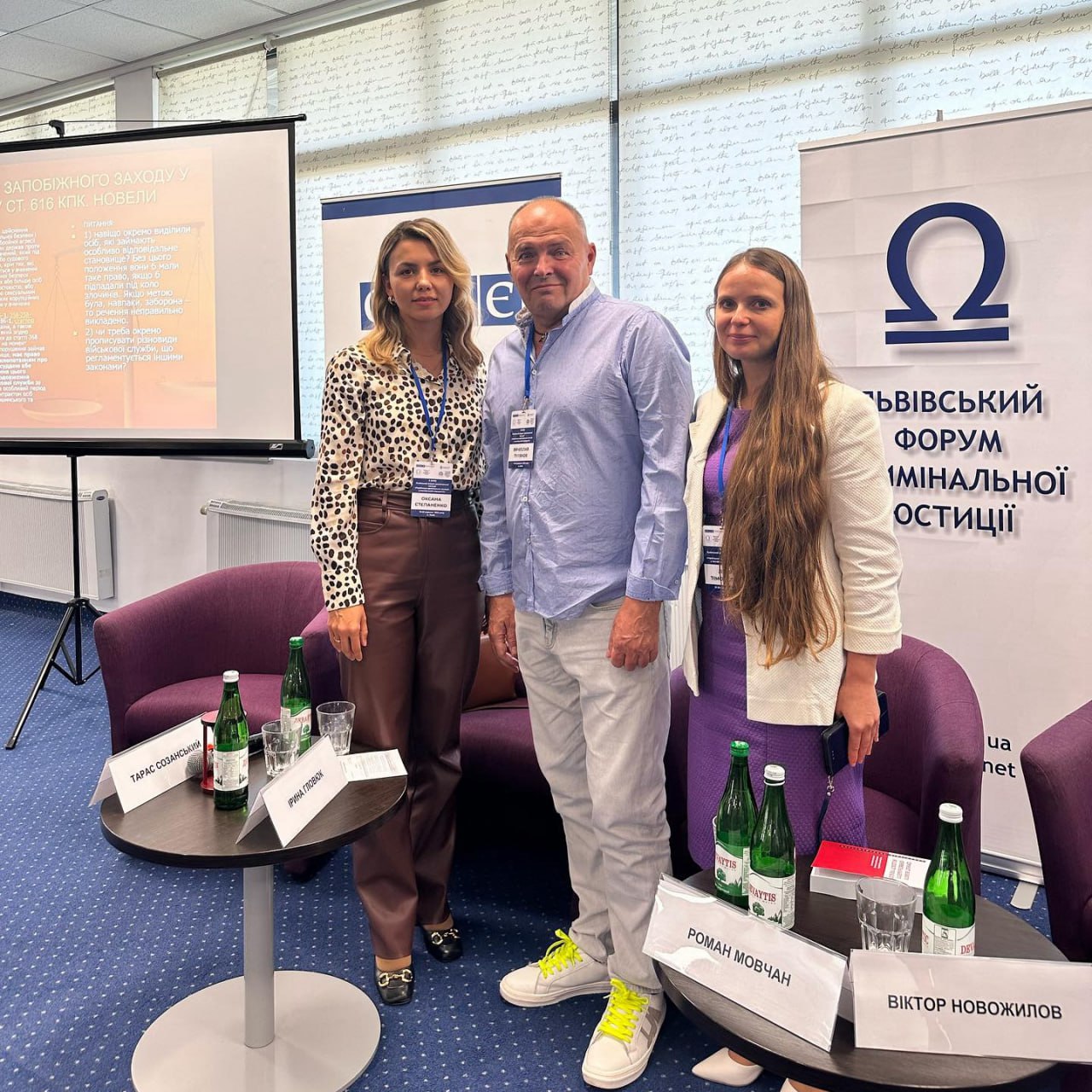
 “What kind of neighbor do we want to see returning from prison?” - this is the slogan used by Swiss law enforcement officials in the field of criminal policy. What should the criminal justice system of Ukraine be like in the wartime and post-war periods? This question was the main focus of the X (XXIII) Lviv Criminal Justice Forum, which took place in Lviv under the auspices of the OSCE on September 19-20, 2021.
Members of the Working Group on Criminal Law Development, OSCE experts, Council of Europe experts, judges, lawyers, investigators, and representatives of the academic community came together to clarify the most pressing issues facing the criminal justice system of Ukraine today.
War and human rights, abuse of law and response to it, human-centered approach and renovation of duties, derogation from the Convention and legality. What is now, what will happen next in the legal field, how will criminal law regulation develop during the war and after the victory - questions, discussions, disputes, and the search for balanced trajectories and conclusions.
A significant amount of time was devoted to the analysis and prospects for the development and possibilities of adopting the Draft Criminal Code of Ukraine, doctrinal research and practical developments in the field of criminal law and procedure in the context of European integration, monographic studies in this area, and analysis of the grounds for criminal liability in the context of development.
The Odesa School of Criminal Law was represented by Doctor of Law, Professor Viacheslav Tuliakov, Doctor of Law, Associate Professor Oksana Stepanenko, and Candidate of Law, Associate Professor Liliia Timofeeva. Some forum participants from Odesa had the opportunity to join the forum broadcasts online.
The long-time speaker of the Forum, CoE expert, ECHR ad hoc judge, Doctor of Law, Professor of the National University “Odesa Law Academy” Viacheslav Tuliakov, devoted his report to the issue of privileges in criminal law as circumstances that, along with restrictions on sanctions and other criminal law measures, should be further enshrined in the statuses of participants in criminal law relations (the state, offenders, victims and representatives of civil society). This approach is in line with the implementation of the rule of law and the development of a balanced criminal policy in the country.
The Forum is over, but its ideas and proposals, discussions on the sidelines and in the course of exchanging views with the speakers are a worthy basis for further development of criminal law science in Ukraine.


