


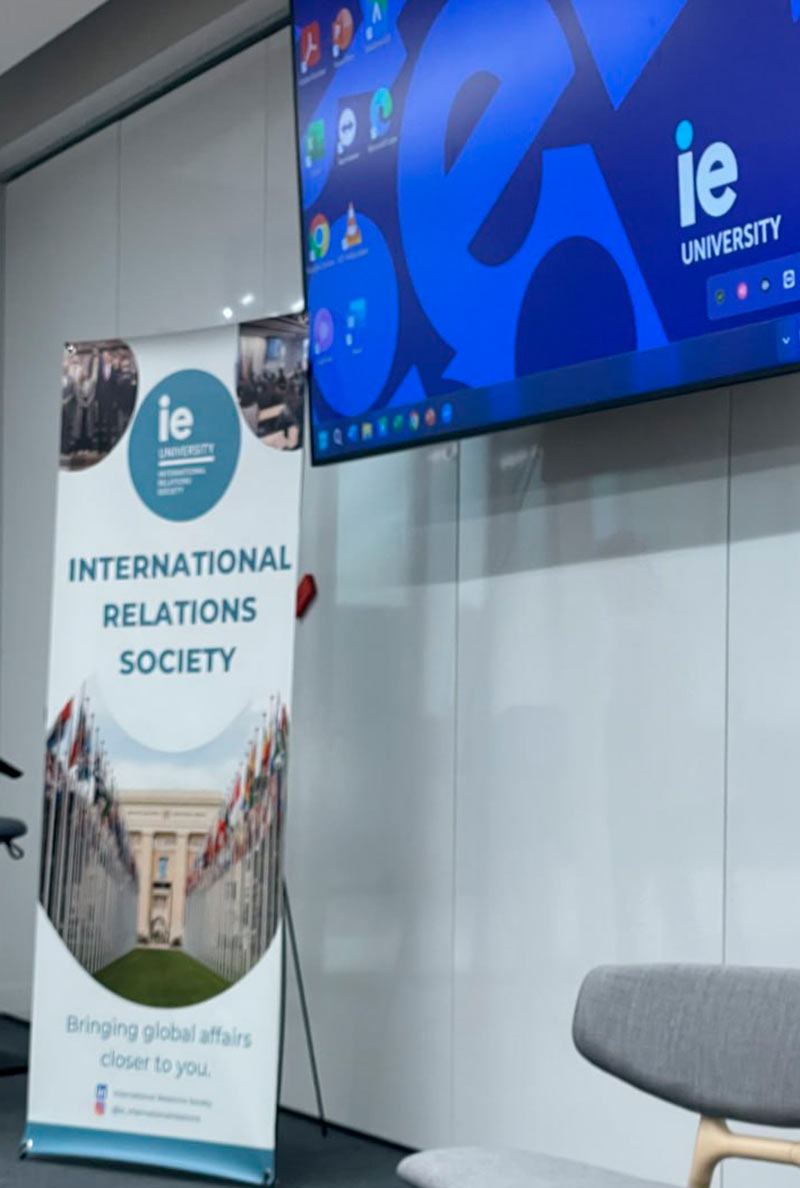
On 15 January, the Ukrainian Club of IE University and the International Law Society of the School of Politics, Economics and Global Affairs held a debate on the challenges facing Ukraine on its way to EU membership.
IE University's School of Politics, Economics and Global Affairs is an institution dedicated to preparing the next generation of global leaders in government, international organisations, corporations and civil society, empowering them to face the challenges of today. The event was attended by Johanna Jacobsson, CEO of Lawcrosse and Adjunct Professor at IE University, Dr Martínez-Tapia, a political scientist specialising in party systems, and Pablo Rupérez Pascualena, an economist and diplomat with extensive experience in European affairs.
The discussion highlighted the multifaceted obstacles Ukraine must overcome on its path to EU membership, as well as the broader implications of its integration into the EU. Ukraine faces significant challenges in achieving EU standards, which requires deep policy and institutional reforms. Strengthening the rule of law, achieving judicial independence, improving public administration and reducing oligarchic influence are key priorities.
Modernising the economy is equally important, as Ukraine needs to bring its energy, agricultural and industrial sectors into line with EU norms while implementing the EU acquis communautaire - a complex and resource-intensive process. Protecting human rights, investigating war crimes, ensuring justice and promoting reconciliation are also essential to meet EU expectations. These challenges are compounded by the ongoing war with Russia, the annexation of Crimea, and post-war reconstruction needs, which require significant international assistance and good governance to rebuild damaged infrastructure and maintain national unity. The debate also highlighted the EU's cautious approach to enlargement, especially with a country as large as Ukraine. Concerns about the financial and political implications of integration prevail among EU member states. Nevertheless, Ukraine's success depends on sustained political will, international support and the resilience of its people. Despite the obstacles, there is optimism about Ukraine's European future, provided it demonstrates commitment to reform and unity.
The discussion highlighted the need for coordinated efforts at both national and international levels to ensure Ukraine's successful path to EU membership. The National University «Odesa Law Academy» was represented by Professor Viacheslav Tuliakov, Visiting Professor at IE University.


